
by Leslie McGeorge, Co-Chair, Earth & Climate Ministry
Along with more than 300 UU congregations nationwide, UUCWC continues to promote intersectional climate justice through worship, advocacy, learning, and community dialogue. Over the past year, the congregation has participated in facilitated discussions exploring meaningful climate justice actions both within the church and in our local community.
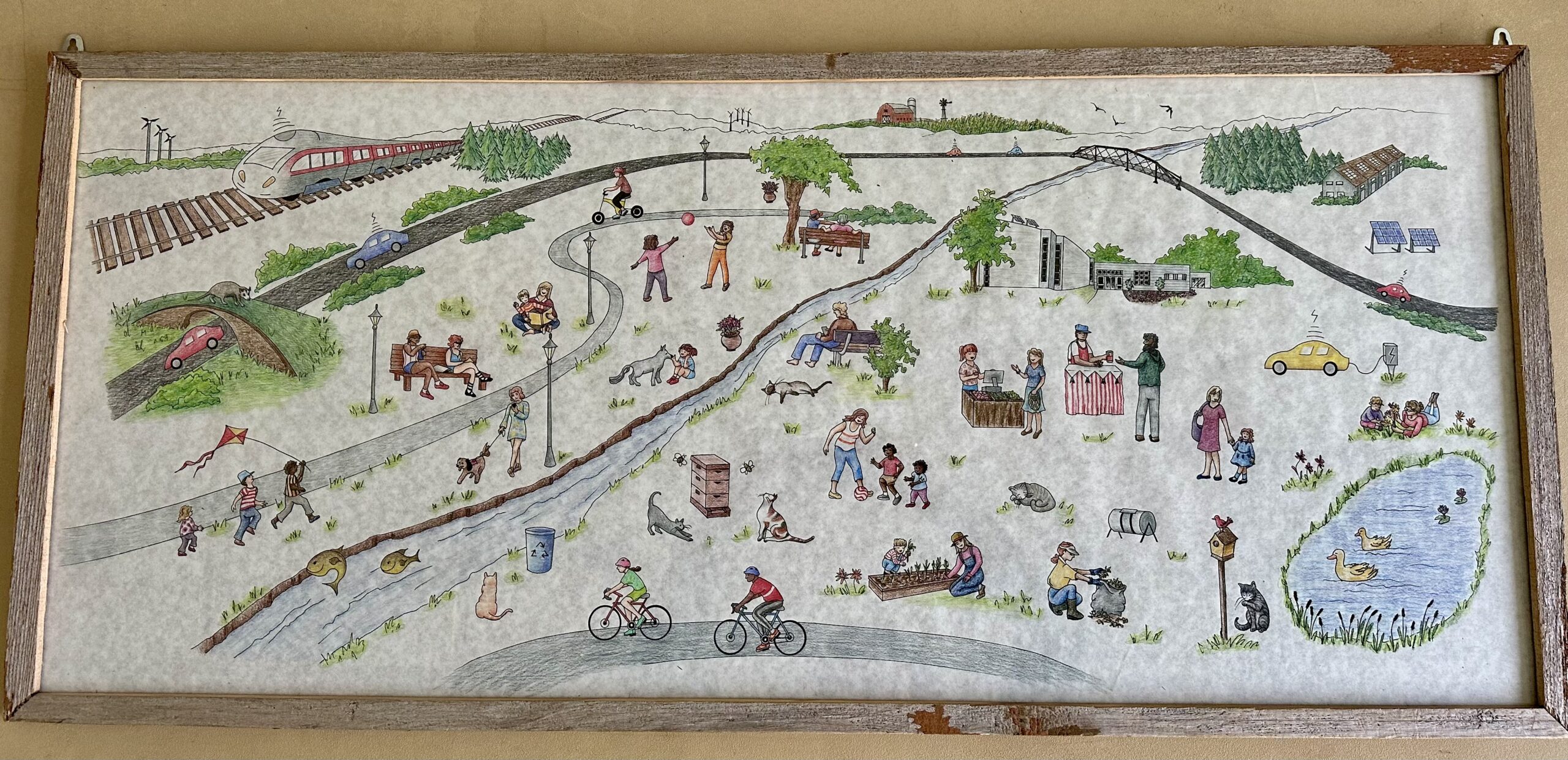
In March 2025, UUCWC hosted Climate Justice Dialogues, gathering over 40 congregants to reflect on shared values and envision a just, thriving future. These discussions led to individual drawings that were later combined into a collective artwork symbolizing our shared climate justice vision. In November, the conversation continued with a Climate Justice Action Session, attended by more than 20 participants, focusing on identifying priority themes and potential areas for congregational action.
Climate Vision Artwork
Sue Busch created a stunning composite drawing inspired by artwork from the March dialogues, expressing our shared hopes for climate justice and community well-being. Roy Vogel framed the piece using recycled wood. The artwork will be displayed on a UUCWC wall selected by the Aesthetics Committee. We appreciate Sue’s and Roy’s creativity and generosity.
Climate Justice Priority Themes and Actions
Participants ranked areas of interest and suggested representative actions. Some efforts are already in progress within the congregation, while others are community-focused and need further development. There is special interest in actions related to the communities of Trenton and Morrisville.
- Advocacy – Advocate for climate justice, climate science, clean energy, and climate-aware candidates through postcards, electronic actions, and calls. Expand advocacy across justice ministries and the wider congregation.
- Local Farming, Food Systems & Gardening – Promote farmers’ markets and CSAs, support excess-produce donations to food banks, offer garden and farm tours, and partner with organizations such as Isles, Rutgers, and Rolling Harvest.
- Community Resilience & Disaster Preparedness – Identify local disaster-response partners and develop doable church activities such as food, clothing, or blanket drives.
- Nature Access for Vulnerable Populations – Expand nature-based activities for HomeFront and urban youth, including park visits and Trenton trail clean-ups. Partner with Bowman’s Hill Wildflower Preserve.
- Trees, Open Space & Native Plants – Support tree planting, wildlife habitat, and native plant use, particularly in urban areas.
- Energy Efficiency & Clean Energy – Advocate for energy incentives and help connect homeowners and nonprofits with energy-coaching resources.
Next Steps
The Earth & Climate Ministry will continue discussions with the Council for Faith in Action, the Racial Justice Ministry, the Food Ministry, the Community Outreach Fund, and community partners. These efforts will also be included in UUCWC’s upcoming application for UUA Green Sanctuary 2030 recognition.
Congregational input is encouraged, particularly on the actions the church can excel at, our short- and long-term priorities, potential partners, and urgent community needs. To share feedback or get more information, contact earthministry@uucwc.org.